Once again (though MUCH later than I did last year) it’s time for me to do my final 2011-related countdown: my FAVORITE pieces of the year.

Again, it’s very different from the “official” Heroclixin’ one. Instead of listing, as I did with that list, all the reasons each fig was a playable, winning piece, I’ll be stating:

  • Why it’s a favorite that I want to play
  • Why I don’t play it all the time
  • When and how I’m planning to play it next

I’m starting with one that was actually sort of released in late 2010 as an honorable mention because it was a tournament prize that most didn’t get until this year:

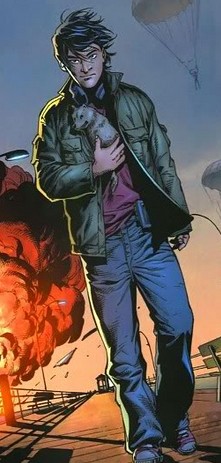
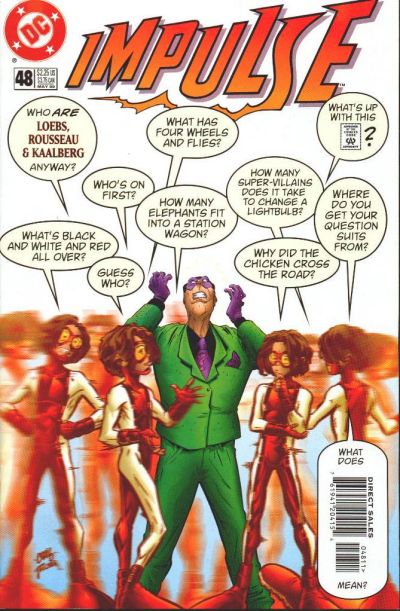
Impulse (DC75th Anniversary 104)

WHY I WANT TO PLAY HIM EVERY WEEK:

The young Bart Allen was a super-fun character early in his career as the aptly named Impulse. But my affection for the character is outshined by his play style.

Although perfectly capable of being run as the usual hit-and-hide Hypersonic Speedster, his 17 DV+Combat Reflexes and special Shape Change (if he’s a solo target and gets the roll, he gets to base the attacker) conspire to encourage you to stay in a bit closer. This twist on HSS makes him a F.U.N. (Friendly, Useful, Nifty) little annoyance piece — well in keeping with the annoying spirit of the actual character.
_______

WHY I DON’T:

There are characters that are MUCH better than him at his price point, and I manage to talk myself into using one or more of those pieces practically every time I’m almost about to field lil’ Bart on a team. His keywords are only so-so for me as well.
______

I’M PLAYING HIM NEXT:

Man, who knows? I could try to squeeze him onto my next Legion of Super-Heroes team, thanks to the seeming synergy between that group and the Future and Teen keywords, but there are enough essential Legionnaires who lack one or the other that Impulse is liable to get benched yet again (like I did just this past weekend). But he’s going to run amok in an upcoming game sooner or later.
Next time, later in the week, check out who’s my #10 favorite HeroClix character of last year! Here’s a hint: Always bet on black!


Not every HeroClix is good. In fact, some are outright mediocre. And in the year 2011, there were a few stinkers.

Or WERE there? Unlike last year, when it was easy to select 10 pretty awful pieces, the candidates this time around were a lot harder to identify.

For example, I selected Major Glenn Talbot as an early front-runner for the 10 Worst list. Sporting the same lousy 33-point cost and 16 DV + Mastermind and 1 damage as LE Bruce Wayne last year, he seemed to fit the mold.

But then I looked at how superbly the Major supports a Soldier team of shooters with his SHIELD TA and non-stop Enhancement and long run of Willpower. Even his Mastermind works OK, what with the copious numbers of cheaper Soldier or Hulkbuster characters in the game.

That’s why, much as I wanted to, I could not put Talbot among the Top Ten Worst HeroClix of 2011 after all.

That's RIGHT. Respect the uniform, MAGGOT!!!


So what ARE the 10 worst? Keep an eye out this week for ’em!

#4

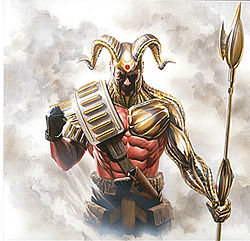
Magog (Superman #035)

The anti-hero of Kingdom Come blasts his way to a high point on the Top Ten because:

  • He’s about as dangerous a grounded Charge figure gets with his 12 AV, Super Strength and 4-damage Exploit Weakness. That’s enough to KO a lot of enemies outright…
  • …which activates his “Excessive Force” trait, allowing him to immediately make a whole ‘nother free action. (In fact, before wiser, calmer rulings prevailed, there was talk of this ability not being limited by the global “once-per-turn” rule on free actions, which led to a lot of one-turn massacres of short-dialed opponents.)
  • Mid-dial, he switches to a ranged focus via Running Shot and Pulse Wave, but remains utterly deadly in melee with Close Combat Expert.
  • Defensively, he’s well-armored with Impervious, Invulnerability or Toughness all dial long.
  • And even though basing him is one of the last things many foes really want to do, his Kingdom Come TA makes that a difficult proposition. It’s especially useful on his end-dial…
  • …when he shifts focus to healing and defending via his SP. He can use Support, sharing his low DV for the action, or use an adjacent ally’s higher DV to help him better stay alive.

This is where I usually list the character’s weaknesses. Magog doesn’t really have any, other than his DV only peaking at 17 and being a boot speed character at 172 points. If that’s all that’s wrong, it’s no wonder he’s one of the very best figs of 2011.

Next is a less powerful but much cheaper piece…a blast from the past.

OK, time for the Top 5 clix of the year!

#5

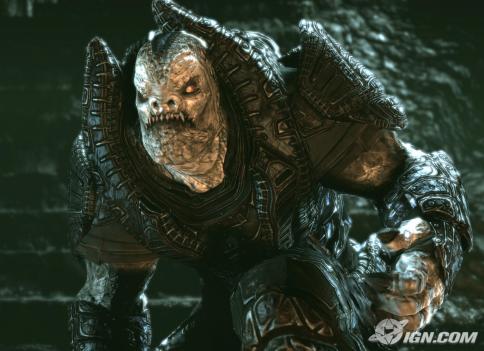
General RAAM (Gears of War #009)

Starting off the top 5 is this ugly guy from Gears of War. His starting 6 Speed and 16 DV would seem reasons enough to keep him out of the top 25, much less among the very best. But as we’re seeing, 2011 was all about the Special Powers and Traits; RAAM is loaded with them.

  • Grenades. He throws both the standard and favored Frag variety (3 damage, plus 2 splash) or Ink (1 penetrating) and adds +3 to the pool (giving himself 3 shots with the power even when run without other GoW or Halo pieces with Grenade pools);
  • which he can throw for free after a move action, thanks to the Speed SP “Grenade Scatter.” Suddenly that 6 speed don’t look so bad, especially with…
  • Starting AVs of 11, 12, 11 and 11, respectively. His 8-click dial never drops below 9 AV.
  • But he doesn’t even have to move to take it to the enemy. If he’s got no action tokens, he can use free Smoke Cloud (at his regular 8 range, natch), then roll a 5-6 and deal 1 damage to folks in that cloud.
  • His starting Invulnerability ramps up to Impervious on clicks 2 &3 along with a rise in DV. He’s never without at least Toughness.
  • Mid-dial Outwit and late Blades/Claws/Fangs round out the General’s skills.
  • Auto-knockback and Phasing/Teleport offered by his Locust Horde TA has its uses.
  • As does the Indomitable ability.

151 points gets you all this in a piece all set to team up with fellow Locust Horde, Soldier or Warrior keywords. In spite of his poor Speed, he definitely earns his ranking at #5.

The next one is not so ugly, but not so pretty, either. More to the point, he has a rep for leaving his enemies particularly ugly…


Remember Feats and Battlefield Conditions? I do.

Remember what a colossal pain they were to deal with? I do.

Do you miss having to deal with them in nearly every tournament? I don’t.

That’s why I was glad for the current Modern and Golden Age formats for HeroClix — the first, for the shiniest and newest elements of the game, uncluttered with destabilizing cardboard elements, and the other for when anything goes.

But in the years since the new formats, WizKids has introduced sets that, despite being the shiny-and-new, are not allowed in the Modern Age game (namely, the HALO and LORD OF THE RINGS sets). This is highly frustrating to those of us who want to play all our clix but don’t particularly care for the destabilizing cardboard elements that can clutter up Golden Age play — or who play in environments that lean more heavily on the Modern Age format.

Simply put, there needs to be an official middle ground between the two extremes for the heroic aspects of gameplay. (I stress “heroic” because a line’s still got to drawn somewhere. The starships of the Star Trek Tactics game don’t really belong. I really wish the designers had done a bit more to distinguish it from the normal HC lines). The number two most needed change to HeroClix is: “SILVER AGE: In this format, all HeroClix figures in Golden Age and Modern Age are legal for play. Feats and Battlefield Conditions are not legal for play. “

Outwit is one of the most expensive powers in the game, and with good reason: it alone has the ability to render useless the powers and/or abilities an opposing figure is paying good points for.

Not only that, but it can do so from the relative safety of 10 squares away, requiring only a clear line of fire. Thus, while the Outwitter is well away from the action, he or his pals can pile on the rendered-defenseless target.

That’s the problem with Outwit for a lot of players. Sometimes, for just a few points to use Outwit and little else, said Outwitter can essentially make multiple clicks of a single damage reducer, which a more powerful opponent needs to stay alive, utterly useless. Coupled with the action disadvantage the heavy hitters already have to overcome, this weakness to Outwit is somewhat unbalancing.

What, then, to do with Outwit? Some suggest restricting it to a shorter range. But I have sore memories of un-Stealthed Outwitters being easy kills even at the 10 range zone. And do we really want to make the best Outwitters — the Batman family and other sneaky types (The Question) — even better by encouraging them to Outwit you AND then shoot you, too? (Not that they can’t do it already, but this rule change would make it more commonplace.)

Others want Outwit not to affect higher-point characters, or to force a power action to do so. There, though, we run the risk of making the already-most-expensive-power-in-the-game Outwit a severely overcosted power on those cheaper pieces, who have paid the cost of the power so that their whole team need not be utterly helpless against high damage reduction. Anyone who’s faced an Invulnerable opponent with a team of only 2-damage fighters knows how much it stinks to depend on critical hits while praying to avoid the just-as-likely critical miss.

Here’s the solution: shorten Outwit’s duration somewhat. We’ve all seen this scenario play out:

PLAYER A: “Batman Outwits Hulk’s Invulnerability and shoots for 3.”
PLAYER B: “Hulk takes 3; he’s down to Toughness.”
PLAYER A: “Question Outwits his Toughness and takes a shot…HIT!”
PLAYER B: “Hulk took 2 and is back Invulnerable again.”
PLAYER A: “OK, since Invulnerability is still countered, Johnny Quick will Perplex his own damage to 3 and push to Hypersonic Hulk.”
PLAYER B: “#%@#%@!!!! I just took 8 straight clicks of damage from these peons!”

The enduring Outwit is the problem here, to me. Thus, the #3 most needed change to HeroClix ought to be this rewrite to Outwit:

“OUTWIT: Give this character a free action to counter a power or a combat ability possessed by a single target opposing character until the beginning of your next turn. Any game effects with a duration specified by the countered power or combat ability are removed. A character using this power must be within 10 squares and line of fire to the target. If a target character is damaged or healed, the effect of Outwit on that character ends immediately.

This change reins in Outwit in a manner more fitting to the source material. Perhaps Daredevil found a way to pierce The Thing’s rocky hide for one attack, but the pain of the hit makes Mr. Grimm tighten up his defenses and not get hit in that way again. It also keeps, say, old-school Black Panther’s 20-points’ worth click of Outwit from negating Superman’s 50-plus run of Impervious, giving Big Blue a chance against a swarm that gets around 6 attacks to his one.

And lest some think this weakens Outwit beyond usefulness for its cost, consider the scenario a few paragraphs above. With this small change, Hulk is STILL taking six clicks of damage that turn. But on a 10-11-click dial, that’s a significant improvement of his odds of survival.

A few revisions of the rules ago, Super Strength got a nice little upgrade for those occasional characters with the power who couldn’t smash through walls or destroy objects without help due to only having 1 or 2 damage value. And for a while, that was all the tweaking Super Strength needed.

But other rules have changed as well, leaving Super Strength somewhat in the dust.

See, back in the old days, Super Strength was guaranteed to have potentially six objects on the board, three of which you could pretty much rely on getting your Super Strong mitts on. But then came Special Objects, with several deleterious effects on the green Attack power:

  • early Special Objects frequently provided powerful 0-cost effects that using the object in an attack would deprive you of, discouraging said use;
  • there were also immobile blue-ringed objects that could never be used with Super Strength;
  • later, Special Objects would usually come with a point cost, further discouraging their use;
  • with the phasing out of feats and bystanders, these new Objects have become increasingly important point fillers, making them more ubiquitous;
  • and all Special Objects must be set up at least 5 squares from all starting areas, rendering them extra vulnerable to destruction by a long-ranged opponent;
  • worst of all, with objects becoming part of the force, players have the choice of fielding fewer or none at all, potentially halving the number of weapons available for Super Strength.

Simply put, all this has served to leave Super Strength rather literally empty-handed in Modern Age games where the perpetually usable Generator/Dumpster 3D object or the Rip It Up feat are unavailable.

Therefore, short of a Modern Age version of the Generator, the #4 most needed change to HeroClix is this revised line to Super Strength: “When this character makes a close combat attack targeting blocking terrain, a wall, or an object, modify its damage value by +2 for the attack and give it a light object from outside the game.”

It’s not a free action, being tied to an attack on terrain, and the object is immediately held, so this new ability to keep objects in the game shouldn’t break things too terribly. (Though Cyborg Superman gives me pause.) It also gives a little more reason to use that smashing 2nd ability of the power, even when already holding an object (not that you’d likely want to try with a heavy object).

<

Regeneration is a double-edged power. On the one hand, it’s a chance to do something few effects allow in HeroClix: healing. On the other hand, it’s a defense power that doesn’t help you one bit on defense and even has a solid chance of utter failure.

The problem is that, in the game, it’s a power action that eats up an opportunity to try running, or fighting, or anything else. In the comics, the power is almost always akin to Wolverine’s healing factor — healing that’s accelerated and automatic.

Regen isn’t costed to be that foolproof and guaranteed. (The Automatic Regeneration feat shows that.) But Regen isn’t quite right as it is, either. Namely, one should never —EVER! — have to risk pushing oneself to KO by choosing to use Regeneration.

Therefore, the #5 most needed change to HeroClix is this additional line to the power’s existing rules:

“This power does not cause pushing damage.”

Regeneration is a dicey enough power as it is. Negative clicks of healing shouldn’t be a possibility.


Mind Control is one of the most expensive powers in the game, and in the early days, it wasn’t hard to see why. Not only did it gain control over a character not on your force, allowing you to move it or make it attack its allies or deactivate one of its powers, but it also gave said character an action token, possibly pushing him/her. Essentially, it combined most of the effects of Telekinesis, Incapacitate and Outwit in one power.

Trouble was, Mind Control’s cost in the point formula isn’t even double ONE of those pricey powers, much less all three — it MIGHT cost as much as Incap OR Outwit. Consequently, it’s been steadily scaled back in a couple of ways:

  • Damage reducers are no longer optional and thus Mind Control can’t turn them “off.” (This used to be a vicious way of circumventing Impervious.)
  • The Mind Control action no longer gives the controlled character an action token.

While MC is still a potent power, it’s also very high-risk. Not only does the initial MC roll have to land (and not be Super Sensed), but then the target frequently has to make its own rolls to either attack its friendlies or try to break away from them. There’s a great chance that this high-risk power could yield very low reward.

Additionally, unlike most other offensive powers, Mind Control has no moving-attack option other than Telekinesis. The power does gain a bit of extra utility when used with extra targets, though the chance of extra self-damage rises, too.

“What’s the big deal?” some might say. “Other powers are pretty situational, too!” But those other powers are much less expensive than Mind Control is. For Mind Control to share a similar price point as the likes of Outwit or Running Shot, it needs to be a power worth using whenever it shows on a dial — one that begs using instead of simply doing a regular attack.

Even setting aside the playability issues, Mind Control also just doesn’t reflect the comics so well. Most of the time, MC is used as a ranged attack and thus requires line of fire. The trouble? Mind Control in the comics doesn’t always require line of fire to the target. Ways mind control occurs in comics:

  • Telepathy (Professor X, Saturn Girl)
  • Illusions (Princess Projectra, Mysterio)
  • Gas or pheromones (Mysterio, Purple Man, Daken, Deadly Nightshade)
  • Hypnotism (Gorgon, Ringmaster)
  • Attached devices (Red King, Mad Hatter)
  • Gobs and gobs of money (Bruce Wayne)

In fact, in many cases it’s more comic-accurate to say the target needs the line of fire to the Mind Controller, not the other way around!

With these things in mind, the #6 most needed change to HeroClix should be this:

MIND CONTROL: Give this character a power action; it makes a close combat or ranged combat attack (minimum range value 4) as a free action using 3 dice (ignore 1 for the result) that deals no damage and ignores Stealth and Shape Change. A successfully hit target becomes friendly to your force. Each target hit may be assigned one action as a free action, immediately after which the target becomes an opposing character again. Deal this character 1 unavoidable damage for each 100 points of the successfully hit targets’ combined point value.

It’d be another light blow to Shape Change, but given all those methods of mind control that just don’t care WHAT the target looks like, I don’t see why Shape Change should ever really work against Mind Control. And again, so many methods of Mind Control can’t be prevented by mere camouflage, so no Stealth. Finally, the “roll-3-use-2” change reflects Mind Control’s difficulty to evade, as it’s usually an unseen attack. It also gives players a reason to try it rather than simply making a standard attack.

That puts us halfway through the list. Have a Merry Christmas and rejoin us tomorrow for the first of the top 5 changes needed for HeroClix!

Some time ago, I did a Top Ten on Barrier, writing something about how it’s one of those sleeper powers that can totally steal the show when built right.

But Barrier has one big, stupid problem: It can only be used on clear terrain.

"So I can use my powers to make shields of ice, but can't turn the water around me INTO ice? LAME."

Barrier should be air-tight; the appearance of unoccupied hindering terrain or water terrain or special terrain shouldn’t preclude the placement of the Barrier token.

Therefore, the #7 most needed change to HeroClix is the change of this line to Barrier from this:

“place up to four blocking terrain markers in adjacent squares of clear terrain that are all within this character’s range (minimum range 1)”

to this:

“place up to four blocking terrain markers in adjacent squares of unoccupied non-blocking terrain that are all within this character’s range (minimum range 1)”

The only wrinkle is how would it interact with objects in squares. I’d rule they can coexist, but there might be a ruling I’m overlooking.